Dehydrated Vegetables
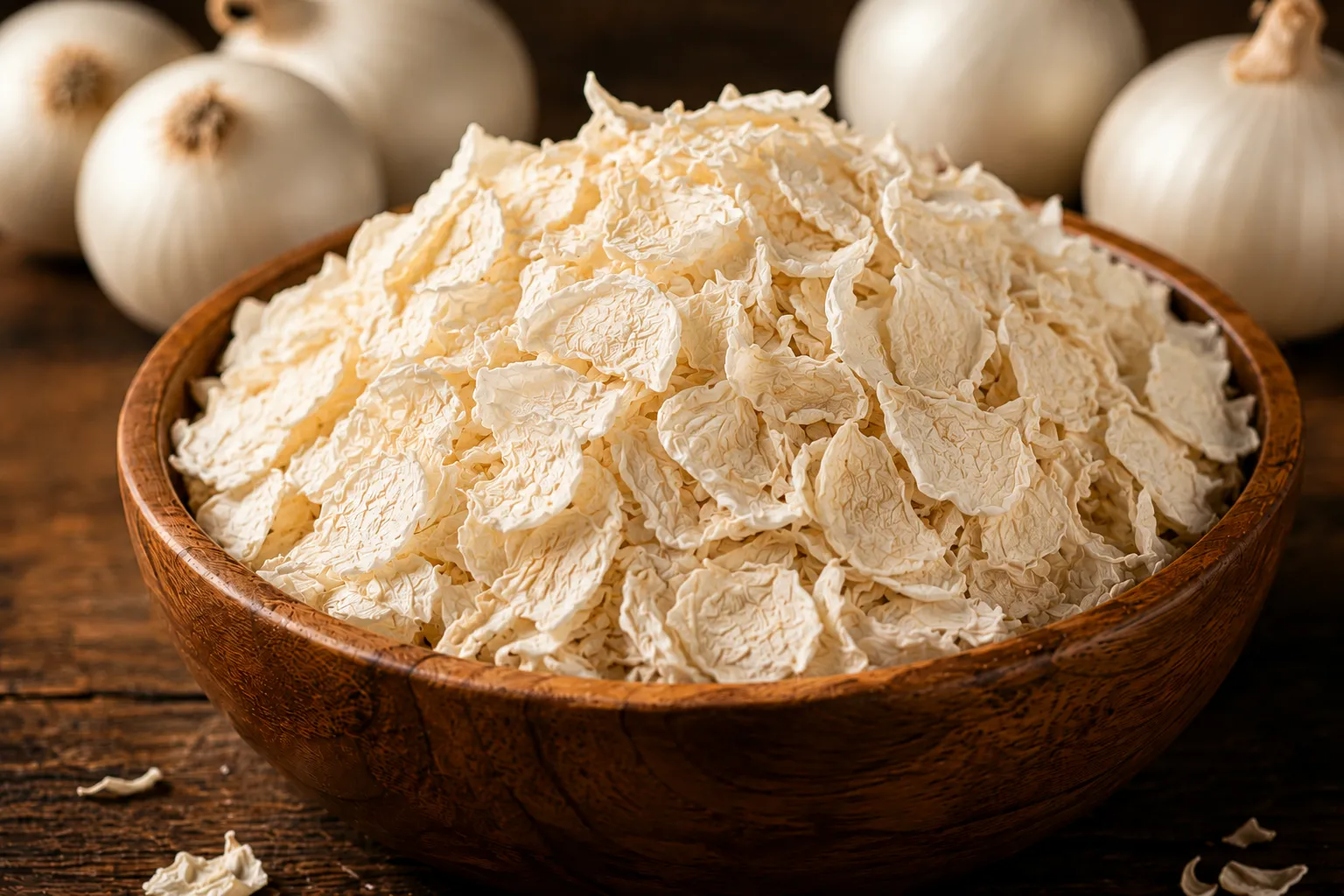
DEHYDRATED WHITE ONION
Naturally dried white onion with strong aroma and clean, creamy white colour. Free flowing and consistent across batches, with a long shelf life and no added preservatives, ideal for soups, seasonings, snack coatings, ready meals and spice blends.
- Strong Aroma & Flavour
- Premium Quality
- Low Moisture
- Long Shelf Life
- No Added Preservatives
Specifications
- HS Code (6 digit)
- 0712.20
- ITC (HS) Code (8 digit)
- 07122000
- Variety
- White onion (red / pink available on request)
- Available Forms
- Kibbled / flakes • chopped / minced (3–5 mm, 5–8 mm) • granules (8–40, 20–40 mesh) • powder (40–80, 80–100, 100–120 mesh)
- Colour
- Creamy white
- Moisture
- ≤ 5% (international export standard)
- SO₂
- ≤ 15 ppm (SO₂ free / natural grade; treated grade on request)
- Foreign matter
- Nil
- Microbiology
- TPC & Yeast/Mould within export limits; E. coli & Salmonella absent
- Packaging
- 25 / 10 / 5 / 1 kg in cartons or kraft bags with food grade liner; private label available
- Shelf life
- 24 months in cool, dry storage
- MOQ
- 500 kg per product; container load pricing on bulk orders
Frequently Asked Questions
VIEW ALLWhite onion powder is the export standard for most seasoning and processed food applications. It gives clean pungency without colouring the finished product, which matters in white sauces, soups, mayonnaise, coatings, and pale seasoning blends. Red onion powder carries a sweeter, milder profile and a pink to light brown tone that suits chutneys, ethnic blends, marinades, and products where the colour is welcome. Roughly speaking, if the colour of your finished product matters, choose white. If flavour character matters more than appearance, red is worth tasting. We supply both and will send comparison samples on request.
Our primary sourcing cluster is Mahuva in the Bhavnagar district of Gujarat, which is the centre of India's dehydrated onion industry and where the specialist processing capacity, varietal supply, and export experience are concentrated. Sourcing from the cluster rather than from opportunistic traders means better varietal consistency, established quality systems, and shorter chains between field and dryer. We visit processing facilities, qualify them against buyer requirements before listing them, and name the processing location on request for buyers who need supply chain transparency for their own audits.
This deserves a direct answer because the industry is often vague about it. Sulphur dioxide is commonly used in dehydrated onion processing to preserve colour and extend shelf life. It is permitted in most markets within declared limits and is entirely legitimate when disclosed, but it must be declared, it triggers allergen labelling above threshold in the European Union and elsewhere, and many clean label buyers will not accept it. We supply both sulphited and unsulphited onion powder. Every certificate of analysis states the sulphur dioxide result explicitly, whether the answer is a number or not detected. We will never ship an undeclared sulphited lot against a clean label specification.
Common export grades run from 40 to 60 mesh for a coarser granular powder through 80 to 100 mesh for standard powder, with finer milling available where your process requires it. Mesh choice is a genuine formulation decision rather than a preference. Finer powders disperse faster and suit instant and beverage applications but are more prone to caking and dust. Coarser grades flow better, resist caking, and suit dry blending lines. Tell us the application and we will recommend a grade, or match a sample you already run.
Pungency in onion is driven by sulphur compounds and is generally assessed through pyruvate content, which allows objective comparison between lots rather than relying on subjective tasting. Variety, growing conditions, and harvest timing all move the figure. Seasoning manufacturers running standardised recipes usually want a specified pyruvate range so their finished product tastes the same from batch to batch. If flavour consistency matters to your programme, tell us at enquiry stage and we will write a pyruvate range into the specification and report against it per lot.