Leaf Powders
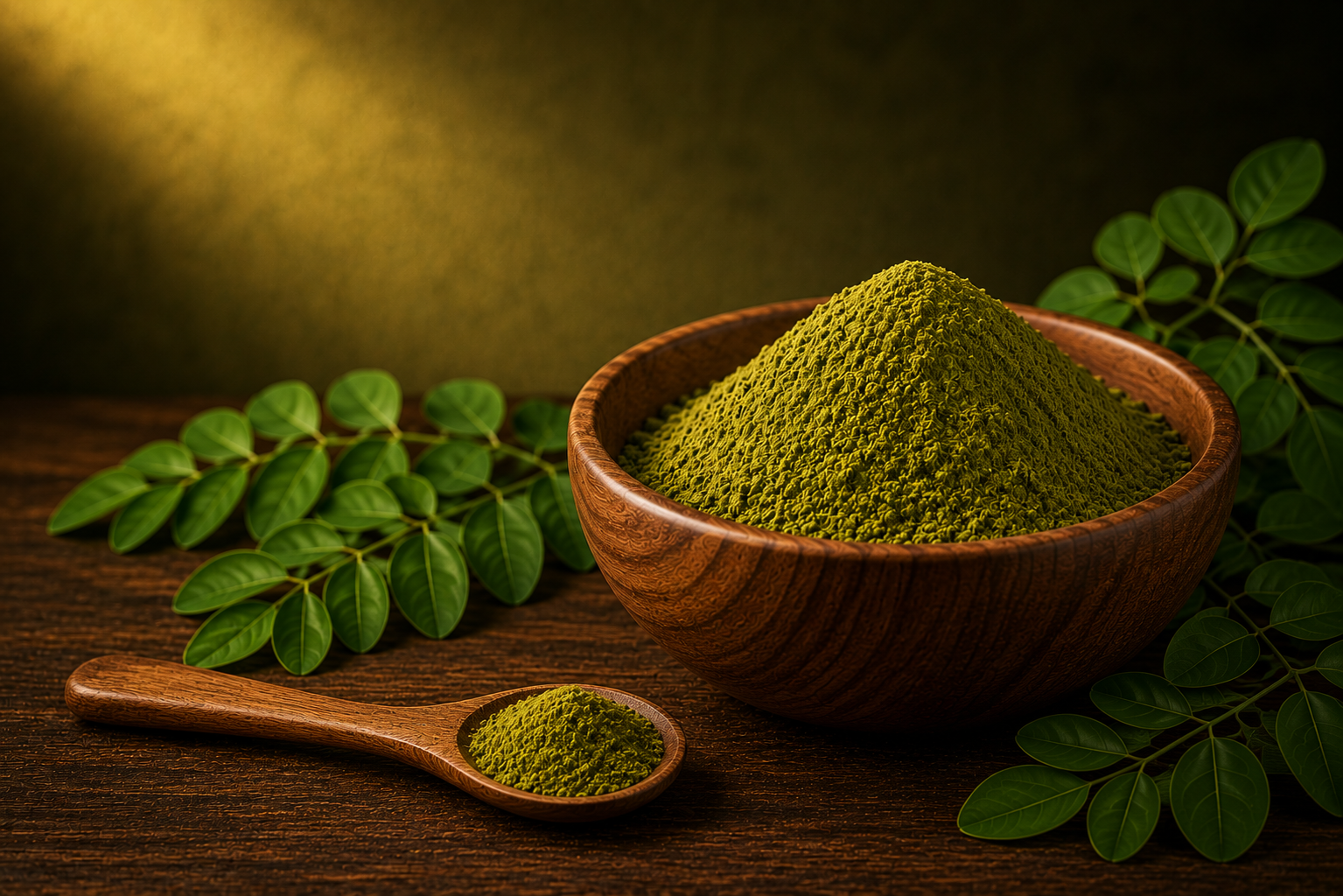
Moringa Leaf Powder
Vivid green Moringa oleifera leaf powder milled from cleaned, low temperature dried pure leaf, free of stem and sweepings. Widely used in dietary supplements, functional foods and beverages, green blends and herbal formulations, with acid insoluble ash reported on every certificate of analysis as the marker of clean, soil free processing.
- Pure Leaf
- No Stem
- Low Temperature Dried
- Low Acid Insoluble Ash
- Vivid Green Colour
- Long Shelf Life
Specifications
- HS Code (6 digit)
- 1211.90 (Harmonised System)
- ITC (HS) Code (8 digit)
- 12119099 (Indian Trade Classification)
- Available Forms
- Low temperature dried leaf powder (80 mesh standard; finer on request)
- Colour
- Vivid green
- Moisture
- ≤ 5%
- Total ash
- ≤ 10%
- Acid insoluble ash
- ≤ 1% (reported on every COA)
- Protein
- ≥ 20% (typical for pure leaf)
- Foreign matter
- Nil
- Microbiology
- Within export limits; E. coli & Salmonella absent; steam sterilised grade on request
- Packaging
- 25 / 10 / 5 / 1 kg in cartons or kraft bags with foil laminate liner; private label available
- Shelf life
- 18–24 months in cool, dry storage away from light
- MOQ
- 500 kg per product; container load pricing on bulk orders
Frequently Asked Questions
VIEW ALLWe supply Moringa oleifera leaf powder produced from cleaned, low temperature dried leaf, milled to a specified mesh. The critical distinction in this market is leaf against leaf and stem. Pure leaf powder is vivid green, lower in fibre, and higher in the nutritional markers buyers actually pay for. Material carrying stem, petiole, or sweepings is duller, higher in ash and crude fibre, and considerably cheaper to produce. Both circulate as moringa leaf powder. We supply pure leaf and we prove it analytically rather than asking you to take it on trust.
Three tests do most of the work. Acid insoluble ash reveals sand and soil contamination, which is the most common adulteration in this category and a direct consequence of poor washing or drying leaf on open ground. Total ash indicates stem and mineral matter content. Crude fibre rises when stem is included. Colour is a useful field check but is easily manipulated, so treat a vivid green with unremarkable analytical figures with suspicion. We report acid insoluble ash and total ash on every certificate of analysis as standard, and we would encourage you to demand the same from any supplier you evaluate.
Chlorophyll and heat sensitive nutrients degrade quickly above roughly 50 degrees Celsius. Sun drying on open ground is cheap but exposes leaf to soil, dust, insects, and ultraviolet degradation, producing a yellow green powder with elevated acid insoluble ash. Controlled low temperature drying in enclosed conditions preserves colour and nutrient profile and keeps contamination out. We source controlled low temperature dried material. It costs more per kilogram and it is visibly and analytically different, which is why we ask buyers to compare samples side by side rather than compare price lists.
Typical parameters are moisture below 5 percent, particle size 80 mesh as standard with finer milling available, colour vivid green, and a characteristic fresh green aroma without musty or hay like notes. Total ash, acid insoluble ash, crude fibre, protein, microbiological limits, and heavy metals are reported per lot against your agreed specification. Because moringa is a leaf crop dried close to the ground, microbiological load and heavy metal uptake both warrant genuine attention rather than a reassuring sentence, and we will discuss realistic limits with your technical team before quoting.