Dehydrated Fruits
Dehydrated Banana Powder
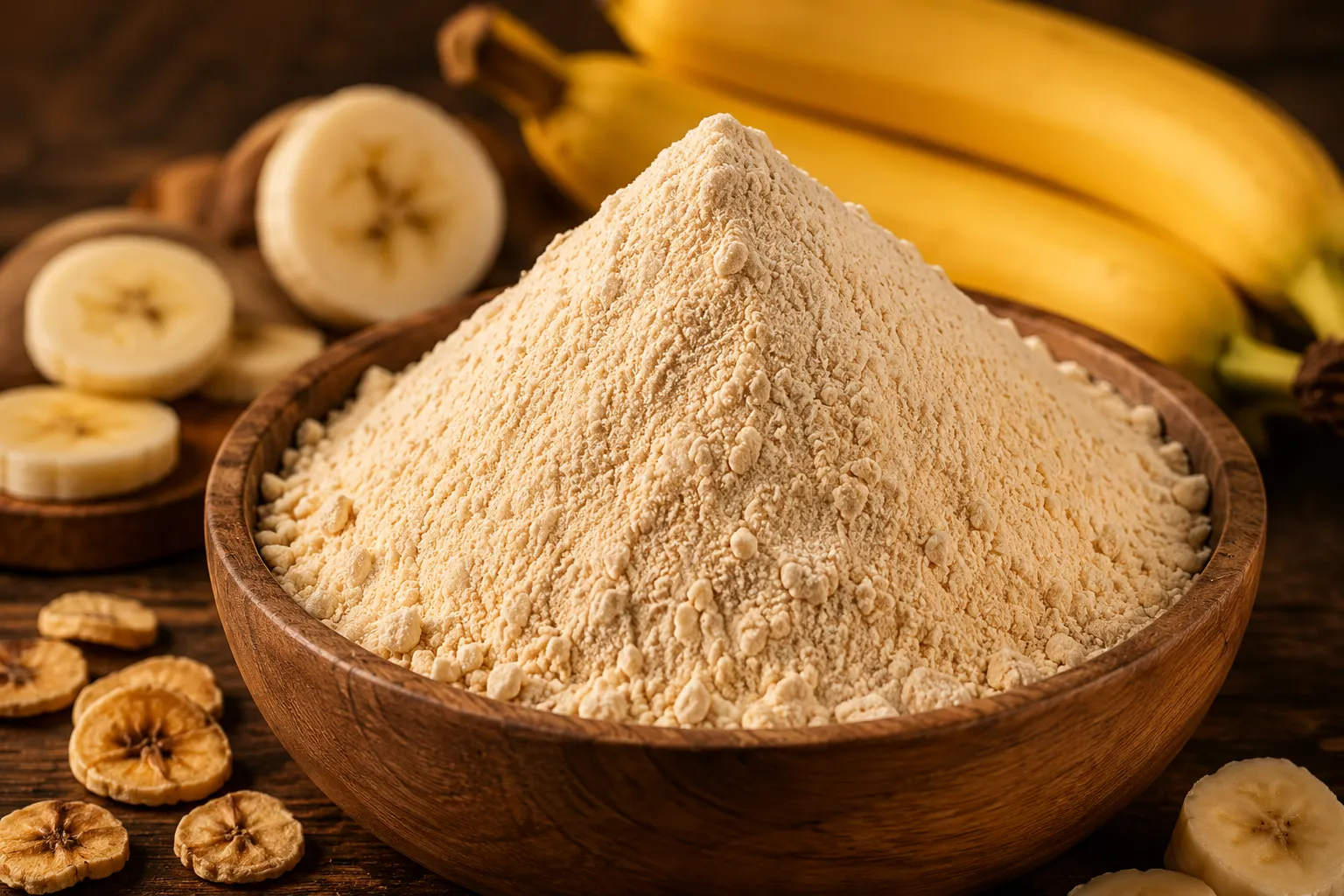
Dehydrated banana powder milled from quality bananas, retaining natural sweetness, colour and nutrients. Used in smoothies and health mixes, baby and infant foods, bakery, cereals and natural flavouring. Available from ripe (spray dried) and green/raw banana.
- Natural Sweetness & Flavour
- Rich in Nutrients
- No Added Preservatives
- Fine & Consistent Texture
- Long Shelf Life
Specifications
- HS Code (6 digit)
- 1106.30
- ITC (HS) Code (8 digit)
- 11063090
- Available Forms
- Ripe banana powder (spray dried) • green / raw banana flour
- Colour
- Off white to pale cream (green banana flour); light cream to golden (ripe banana powder)
- Moisture
- ≤ 10% (green banana flour); ≤ 5% (ripe banana powder)
- Particle Size
- 80–100 mesh (green); 60–80 mesh (ripe)
- Additives
- Green banana flour is 100% banana with nothing added; ripe banana powder is offered as a 100% fruit grade with nothing added, or as a spray dried grade with maltodextrin carrier, with carrier type and percentage declared on every specification and certificate of analysis
- Foreign matter
- Nil
- Microbiology
- Within export limits; E. coli & Salmonella absent
- Packaging
- 25 kg multiwall paper bags with food grade liner (foil laminate liner for the ripe grade); 10 and 20 kg foil laminate bags; private label available
- Shelf life
- 12–18 months in unopened original packaging, stored below 25°C, away from light and humidity
- MOQ
- 500 kg per product; container load pricing on bulk orders
Frequently Asked Questions
VIEW ALLThey are two different products from the same fruit, and choosing between them is the first specification decision. Green banana powder is milled from unripe fruit harvested before starch converts to sugar: pale, neutral tasting, high in resistant starch, and used where fibre, gluten free structure, or slow release carbohydrate is the goal. Ripe banana powder carries the golden colour, aroma, and natural sweetness of the ripe fruit, and is used where banana flavour is the point: beverages, dairy, bakery, cereals. We supply both as separate grades with separate specifications, and we will quote the correct one once you tell us the application.
Resistant starch in green banana flour typically falls between 40 and 60 percent on a dry basis, but the honest answer is that this figure moves with harvest maturity and drying temperature. We do not publish a single headline number, because a number without a method behind it is meaningless. We agree a target range with you before production, specify the analytical method on the purchase contract, and report the actual result on the certificate of analysis for every lot. If your specification calls for a guaranteed minimum, tell us at enquiry stage so harvest timing can be planned for it.
This is where most low cost banana flour fails. Resistant starch is destroyed by heat: drum drying, extrusion, or aggressive hot air drying gelatinises the starch granule and the resistant starch fraction collapses, often to single digits, while the label still says green banana flour. Our green grade is dried below 60 degrees Celsius and the outcome is verified by testing rather than by trusting a process description. If a competing quotation is materially cheaper, ask that supplier for a resistant starch result on the delivered lot. The gap usually explains itself.
Yes, and this matters enough that we raise it before you ask. Ripe banana pulp is high in sugar and extremely sticky, so spray drying almost always requires a carrier, most commonly maltodextrin, making up a meaningful share of the finished powder. A supplier claiming pure spray dried banana powder with no carrier is either selling something else or not telling you the whole story. We declare the carrier type and inclusion level on every specification and certificate of analysis. The green flour, by contrast, is milled whole fruit and carries no additives. If you need a carrier free ripe product for a clean label programme, freeze dried is the honest route and we will quote it accordingly.
Spray dried is the commercial workhorse: good flavour retention, fine free flowing particle, and the most competitive cost per kilogram. Drum dried gives a slightly cooked, caramel leaning profile that some bakery buyers actually prefer, at lower cost again. Freeze dried retains the brightest fresh fruit character and colour but sits at a substantially higher price and suits premium retail or infant applications. There is no universally correct answer. Tell us the application and target landed cost and we will recommend honestly, including telling you when the cheaper process will serve you perfectly well.